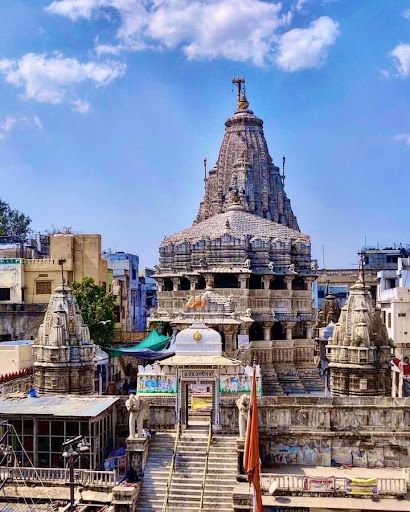
Nestled in the heart of Udaipur, the enchanting Jagdish Temple stands as a magnificent testament to India’s rich cultural and architectural heritage, drawing countless visitors as one of the country’s most revered spiritual and historical attractions. Built in 1651 by Maharana Jagat Singh, this grand Hindu temple showcases intricate carvings, towering spires, and a serene ambiance, making it a must-visit destination for those exploring India’s diverse religious landmarks.
Old City, Udaipur, Rajasthan 313001, India
The Jagdish Temple, located in the heart of Udaipur’s Old City, Rajasthan, is a stunning architectural masterpiece renowned for its intricate carvings and historical significance. This 17th-century Hindu temple attracts visitors with its grand Indo-Aryan design, featuring detailed sculptures and a towering shikhara. Its central location makes it easily accessible, while the serene atmosphere offers a peaceful retreat amidst the bustling city. A must-visit for those exploring Rajasthan’s cultural heritage, the temple stands as a testament to India’s rich artistry and devotion.
More information
Where is Jagdish Temple located?
The Jagdish Temple is situated in the Old City of Udaipur, Rajasthan, with the exact address being Udaipur, Rajasthan 313001, India. It is one of the most prominent Hindu temples in the region, attracting both devotees and tourists.
What is the significance of Jagdish Temple?
Dedicated to Lord Vishnu, the Jagdish Temple is an architectural marvel from the 17th century, showcasing intricate Indo-Aryan craftsmanship. Its spiritual aura and historical importance make it a must-visit among attractions in India.
How is the visitor experience at Jagdish Temple rated?
With an impressive 4.7 rating, visitors often praise the temple’s grandeur, detailed carvings, and peaceful atmosphere. Many highlight its central location in Udaipur as a key reason for its popularity.
What are the architectural highlights of Jagdish Temple?
The temple features exquisite sculptures, a towering shikhara (spire), and beautifully carved pillars and mandapas (halls). Its architectural brilliance reflects the Mewar dynasty’s legacy, making it a standout attraction.