
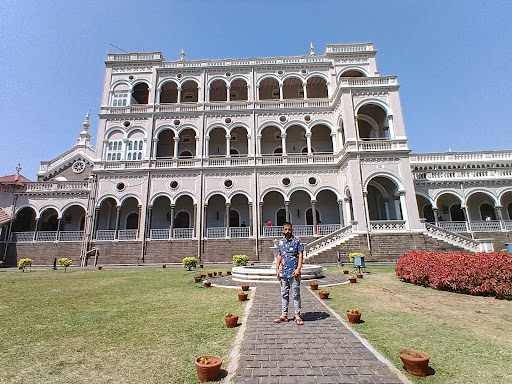
Nestled in the historic city of Pune, the Aga Khan Palace stands as one of India’s most significant architectural and cultural landmarks, drawing visitors with its elegant Indo-Saracenic design and profound historical resonance. Built in 1892 by Sultan Muhammed Shah Aga Khan III, the palace gained further prominence during India’s struggle for independence, serving as a residence for Mahatma Gandhi and his wife Kasturba, who passed away within its premises. Today, it functions as a museum and memorial managed by the Aga Khan Trust, preserving artifacts and photographs that chronicle Gandhi’s life and the nation’s freedom movement, making it a must-visit destination for those exploring the rich tapestry of attractions in India.
HW32+2JM, Palace View Society, Kalyani Nagar, Pune, Maharashtra 411006, India
Located in the heart of Pune at HW32+2JM, Palace View Society, Kalyani Nagar, the Aga Khan Palace stands as a historically significant landmark with immense cultural value. Built in 1892, this architectural marvel offers visitors a serene environment, sprawling gardens, and a profound connection to India’s freedom struggle, as it once served as a detention site for Mahatma Gandhi. Its well-preserved structure, combined with educational exhibits and tranquil surroundings, makes it an ideal destination for history enthusiasts and tourists seeking meaningful heritage experiences. The palace’s strategic location in the upscale Kalyani Nagar area further enhances its accessibility and appeal for both domestic and international visitors.
| Sunday | 9 AM–5:30 PM |
| Monday | 9 AM–5:30 PM |
| Tuesday | 9 AM–5:30 PM |
| Wednesday | 9 AM–5:30 PM |
| Thursday | 9 AM–5:30 PM |
| Friday | 9 AM–5:30 PM |
| Saturday | 9 AM–5:30 PM |
More information
What is the historical significance of the Aga Khan Palace?
The Aga Khan Palace holds immense historical importance as it is closely associated with Mahatma Gandhi and the Indian independence movement. Built in 1892 by Sultan Muhammed Shah Aga Khan III, the palace served as a residence for Gandhi and other leaders, including Kasturba Gandhi and Mahadev Desai, during their imprisonment by the British from 1942 to 1944. It was here that both Kasturba and Mahadev passed away, making the site a symbol of sacrifice. Today, it stands as a national monument managed by the Aga Khan Trust for Culture, preserving Gandhi’s legacy and promoting heritage conservation in India.
Why is the Aga Khan Palace a must-visit attraction in India?
Located at HW32+2JM, Palace View Society, Kalyani Nagar, Pune, the Aga Khan Palace is a must-visit due to its unique blend of architectural grandeur and historical depth. The palace features Italianate architecture with spacious halls, beautiful gardens, and intricate stonework, creating a serene atmosphere. Visitors are drawn not only to its aesthetic appeal but also to the Gandhi National Memorial housed within, which includes photographs, personal belongings, and exhibits on his life and principles. With a visitor rating of 4.5, it stands among India’s most respected cultural and historical sites.
What can tourists expect during a visit to the Aga Khan Palace?
Tourists visiting the Aga Khan Palace can expect a peaceful and educational experience centered around Indian history and spiritual leadership. The site includes guided tours of the palace rooms, the memorial museum, and the samadhi (memorial) of Mahatma Gandhi, where he was cremated after his assassination. Well-maintained lawns, fountains, and walking paths enhance the visitor experience, making it ideal for families, history enthusiasts, and photographers. The tranquil ambiance, combined with the profound legacy of the location, offers a reflective journey into India’s past.
How does the Aga Khan Palace contribute to cultural heritage in India?
The Aga Khan Palace plays a vital role in preserving cultural heritage in India through restoration efforts led by the Aga Khan Trust for Culture. It serves as a center for education and remembrance, promoting the values of nonviolence and civil rights championed by Mahatma Gandhi. By maintaining the authenticity of the structure and curating meaningful exhibits, the palace ensures that future generations understand India’s struggle for independence. Its recognition as a protected monument and high visitor satisfaction of 4.5 underscores its significance in India’s cultural landscape.