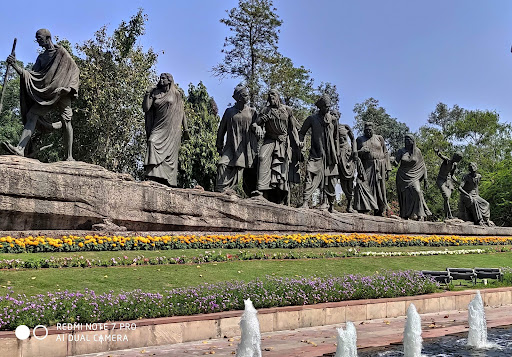
Rising as a powerful symbol of India’s struggle for independence, the Dandi March Statue in Delhi commemorates Mahatma Gandhi’s historic 1930 salt march, a defining moment in the nation’s fight against British rule. Located in the heart of the capital, this striking monument honors the courage and nonviolent resistance that shaped modern India, drawing visitors who seek to connect with the country’s rich political heritage. As one of Delhi’s most poignant attractions, it stands not only as a tribute to a pivotal event but also as a reminder of the enduring power of peaceful protest within India’s broader tapestry of cultural and historical landmarks.
Mother Teresa Cres, Willingdon Crescent, Raisina Hills, New Delhi, Delhi 110011, India
Located in the heart of New Delhi, the Dandi March Statue stands as a powerful tribute to Mahatma Gandhi’s historic 1930 protest against British salt laws, symbolizing nonviolent resistance and civil disobedience. Situated near key landmarks on Mother Teresa Crescent in Raisina Hills, this monument not only serves as a significant historical landmark but also enhances the cultural and educational value of the area. Its prominent location ensures high visibility and foot traffic, making it an ideal site for heritage tourism and civic engagement. The statue’s enduring presence reinforces national pride and offers institutions and businesses nearby a unique association with India’s struggle for independence.
| Sunday | 7 AM–8 PM |
| Monday | 7 AM–8 PM |
| Tuesday | 7 AM–8 PM |
| Wednesday | 7 AM–8 PM |
| Thursday | 7 AM–8 PM |
| Friday | 7 AM–8 PM |
| Saturday | 7 AM–8 PM |
More information
Where is the Dandi March Statue located?
The Dandi March Statue is located in Raisina Hills, near Mother Teresa Crescent and Willingdon Crescent in New Delhi, Delhi 110011, India, standing as a prominent tribute within the nation’s capital.
What does the Dandi March Statue commemorate?
The Dandi March Statue honors the historic 1930 Salt March led by Mahatma Gandhi, symbolizing nonviolent resistance and India’s struggle for independence through civil disobedience against British salt laws.
Why is the Dandi March Statue significant among Indian attractions?
As part of New Delhi’s rich historical landscape, the Dandi March Statue serves as a powerful reminder of India’s peaceful resistance movement and attracts visitors interested in the country’s freedom struggle and national heritage.
What do visitors say about the Dandi March Statue?
The Dandi March Statue has received a rating of 4.5 from visitors who appreciate its historical depth, symbolic importance, and its serene location amidst the political and cultural heart of India.